How to remember Chinese characters: 6 methods that work
There are thousands of characters, but they are built from parts that repeat. If you see familiar parts in a character instead of a random set of strokes, you learn much faster. Here are six methods that help.
1. Break a character into parts
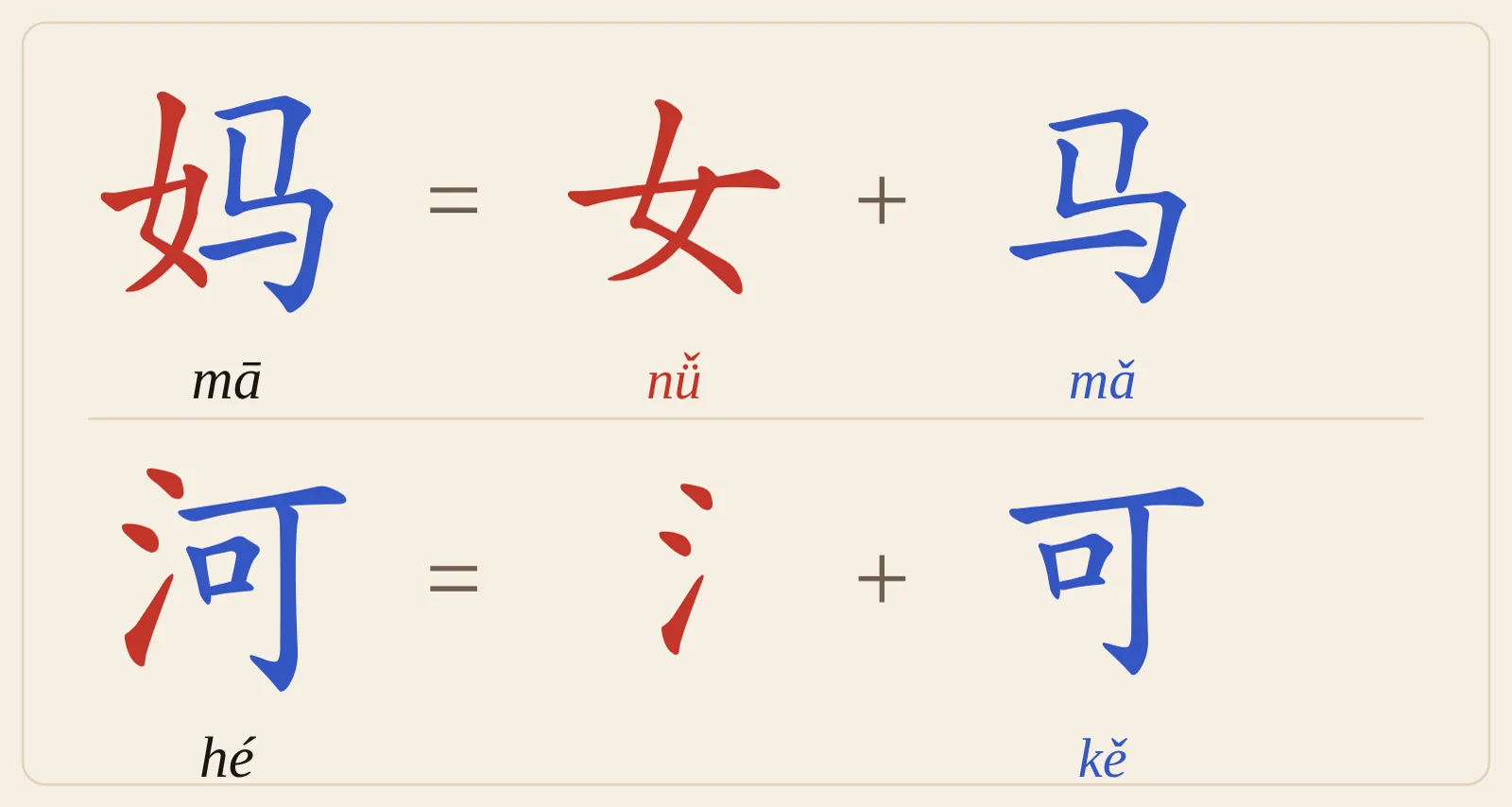
Most characters have two parts: one hints at the meaning, the other at the sound. 妈 mā "mother" is 女 "woman" (meaning) plus 马 mǎ (sound). 河 hé "river" is 氵 "water" plus 可 kě. When you meet a new character, first look for the parts you already know.
2. Learn the most common radicals
A radical is the part of a character used to look it up in a dictionary. A few dozen radicals turn up all the time:
- 氵 water: 河 "river", 海 "sea", 洗 "to wash";
- 口 mouth: 吃 "to eat", 喝 "to drink", 叫 "to call";
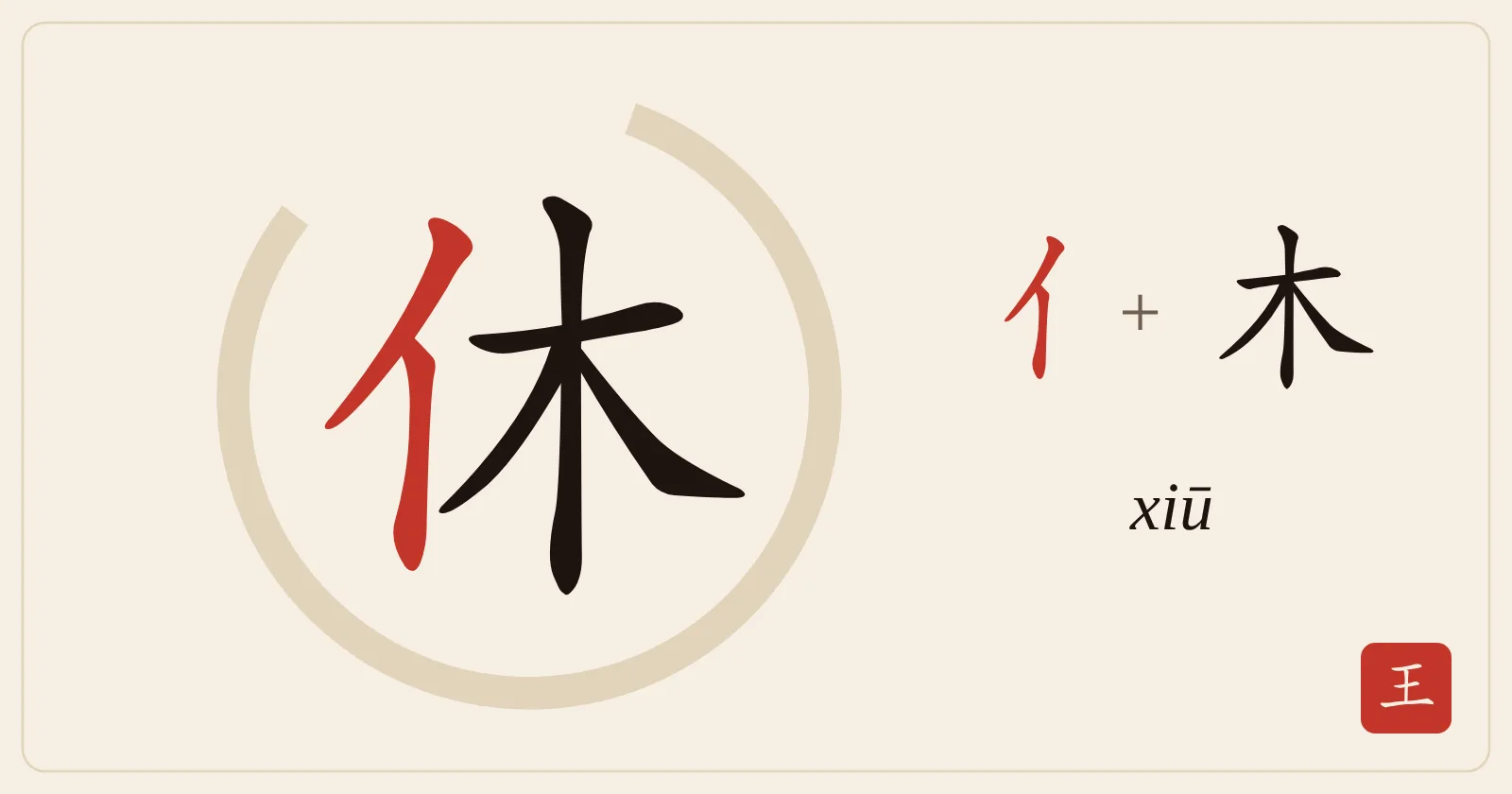
- 亻 person: 你 "you", 他 "he", 休 "to rest";
- 扌 hand: 打 "to hit", 找 "to look for", 推 "to push";
- 木 tree: 树 "tree", 林 "grove", 桌 "table";
- 讠 speech: 说 "to speak", 话 "words", 语 "language".
3. Write by hand in stroke order
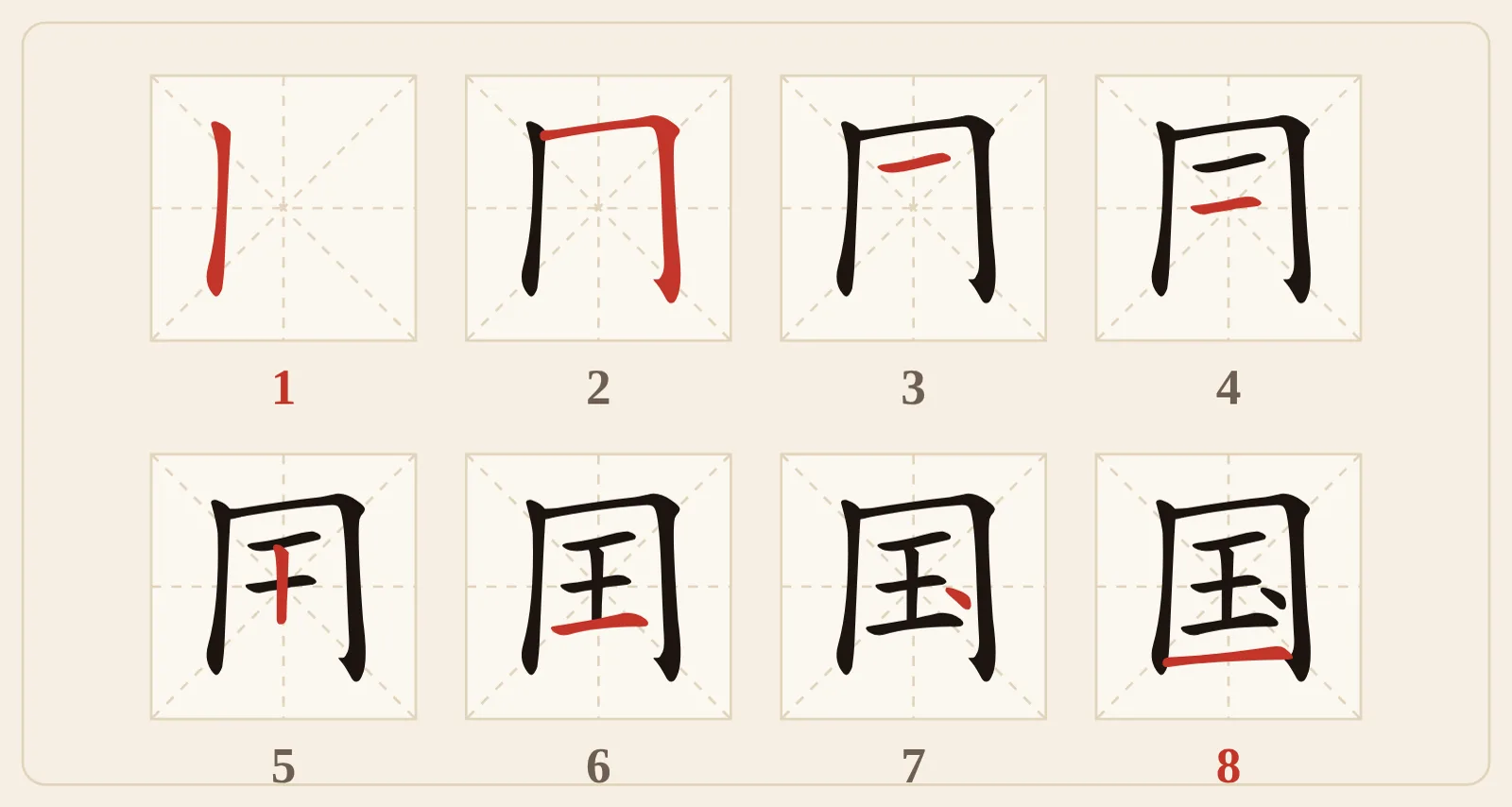
Writing by hand sticks better than just looking. Stroke order follows a few rules: horizontal before vertical (十), top to bottom (三), left to right (川), the outer frame first, then what is inside, with the closing stroke last (国), the middle before the sides (小).
4. Learn characters in words
The same character appears in different words: 学 is in 学生 "student", 学习 "to study" and 大学 "university". A word with context sticks better, and you learn exam vocabulary along the way.
5. Review at intervals
Come back to a character after a day, then after a few days, a week and a month. The best moment to review is just as you start to forget it: that is how memory keeps it for a long time.
6. Make up stories
A short story ties the parts into one picture. 休 xiū "to rest" is a person 亻 leaning against a tree 木. 明 míng "bright" is the sun 日 and the moon 月 together. The more vivid the story, the longer it stays.
How many characters you need to write
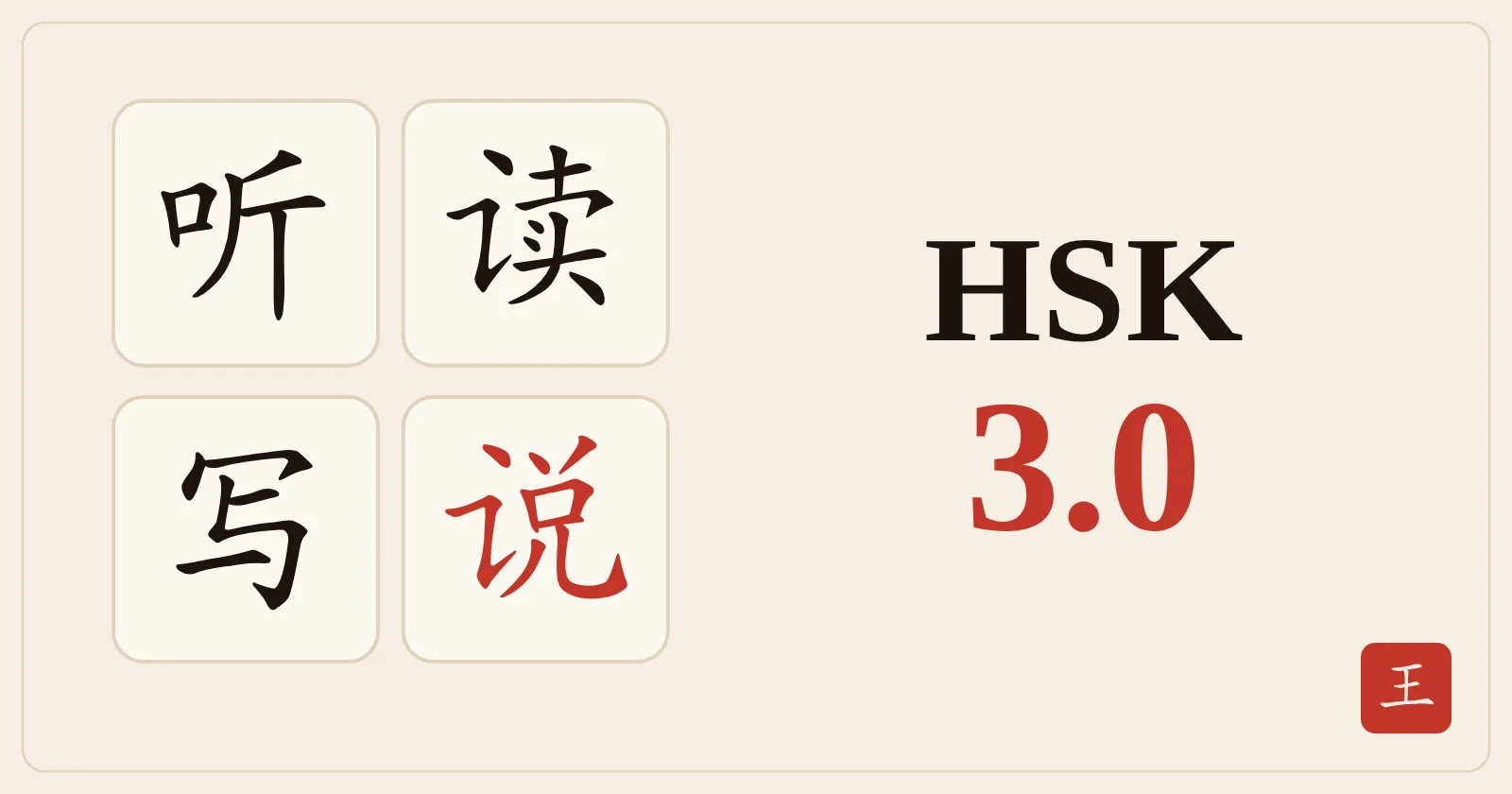
Under the 2025 HSK syllabus you need to be able to write by hand 100 characters for HSK 2, 250 for HSK 3, 400 for HSK 4, 550 for HSK 5, 700 for HSK 6 and 1,200 for HSK 7–9. You need to recognise more of them when reading.
In Master Wang you can write characters stroke by stroke in handwriting practice, and reviews come when a word is due, using the FSRS algorithm.