Chinese tones: how to hear and pronounce them
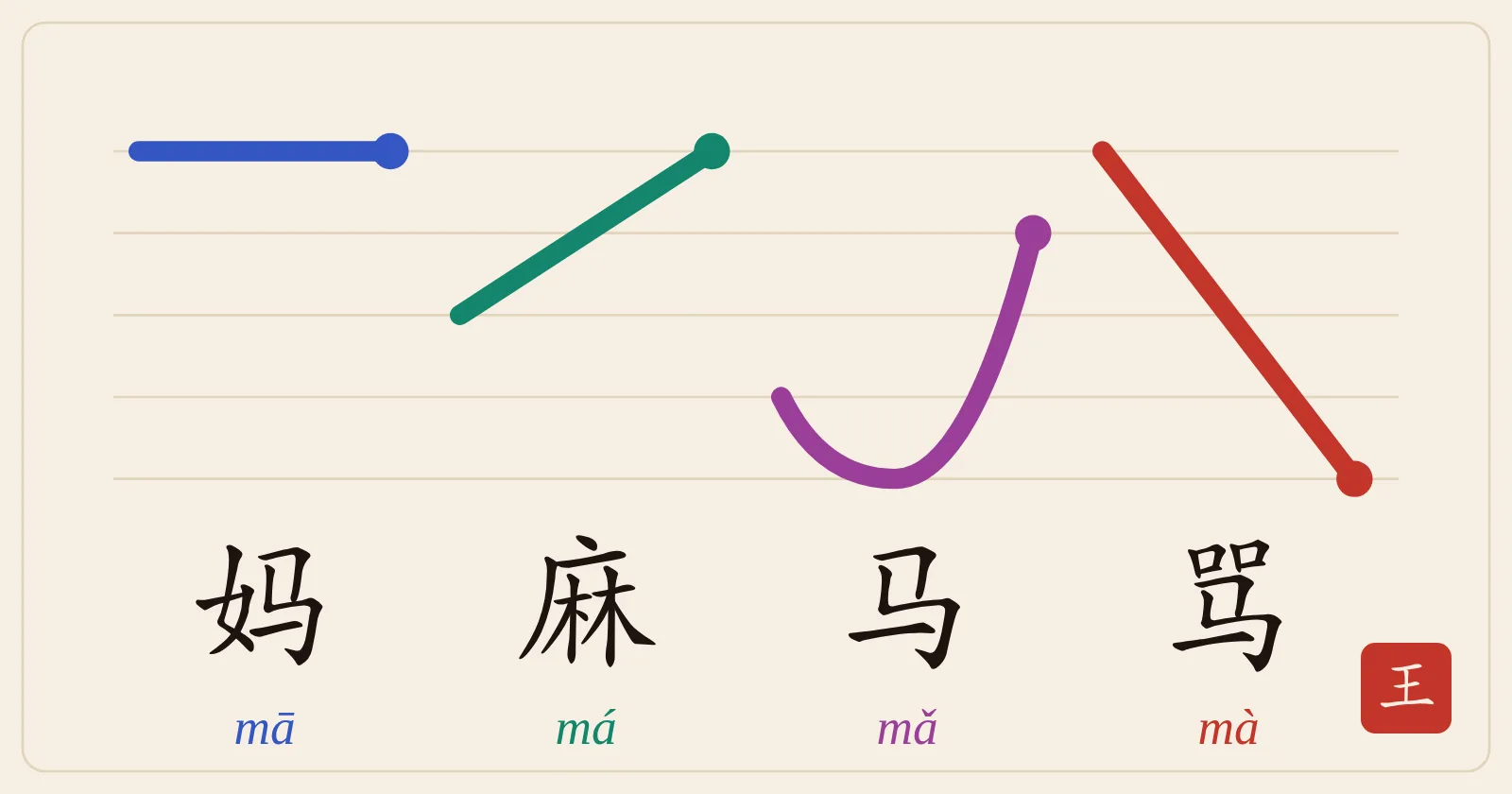
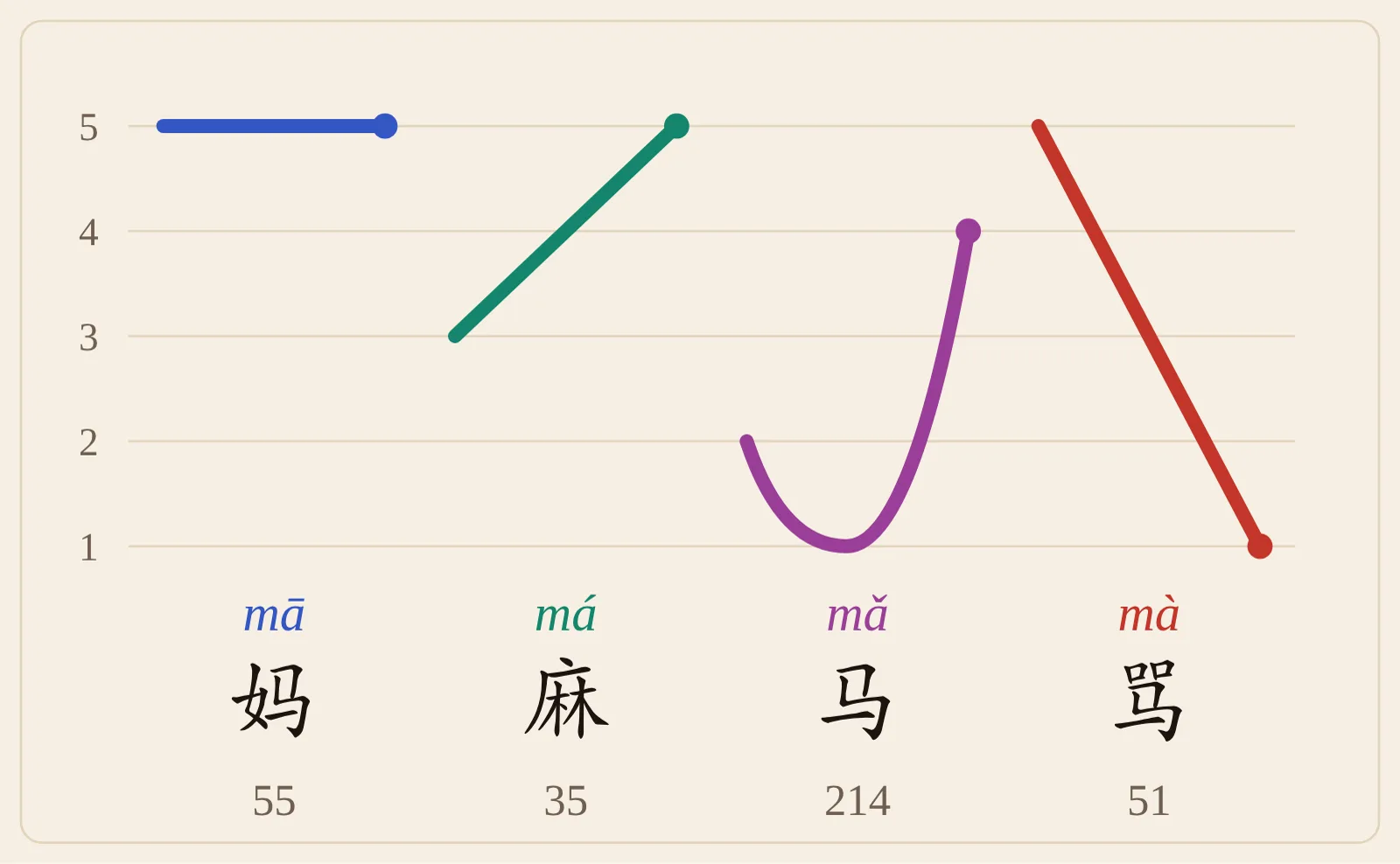
In Chinese the same syllable with a different tone is a different word: mā 妈 "mother", má 麻 "hemp", mǎ 马 "horse", mà 骂 "to scold". The tone is as much a part of the word as its sounds. Get the tone wrong and people may misunderstand you or not understand you at all.
Four tones and the neutral tone
It helps to describe pitch on a scale from 1 (lowest) to 5 (highest).
- First tone ā: high and level (5–5), as if you were holding a note.
- Second tone á: rises from middle to high (3–5), like a surprised "yes?".
- Third tone ǎ: low. On its own or at the end of a phrase it dips and rises a little (2–1–4); in speech it usually just stays low (2–1).
- Fourth tone à: falls sharply from top to bottom (5–1), like a firm "No!".
- Neutral tone: short and light, with no mark over the vowel: 妈妈 māma, 你们 nǐmen.
How tones change in words
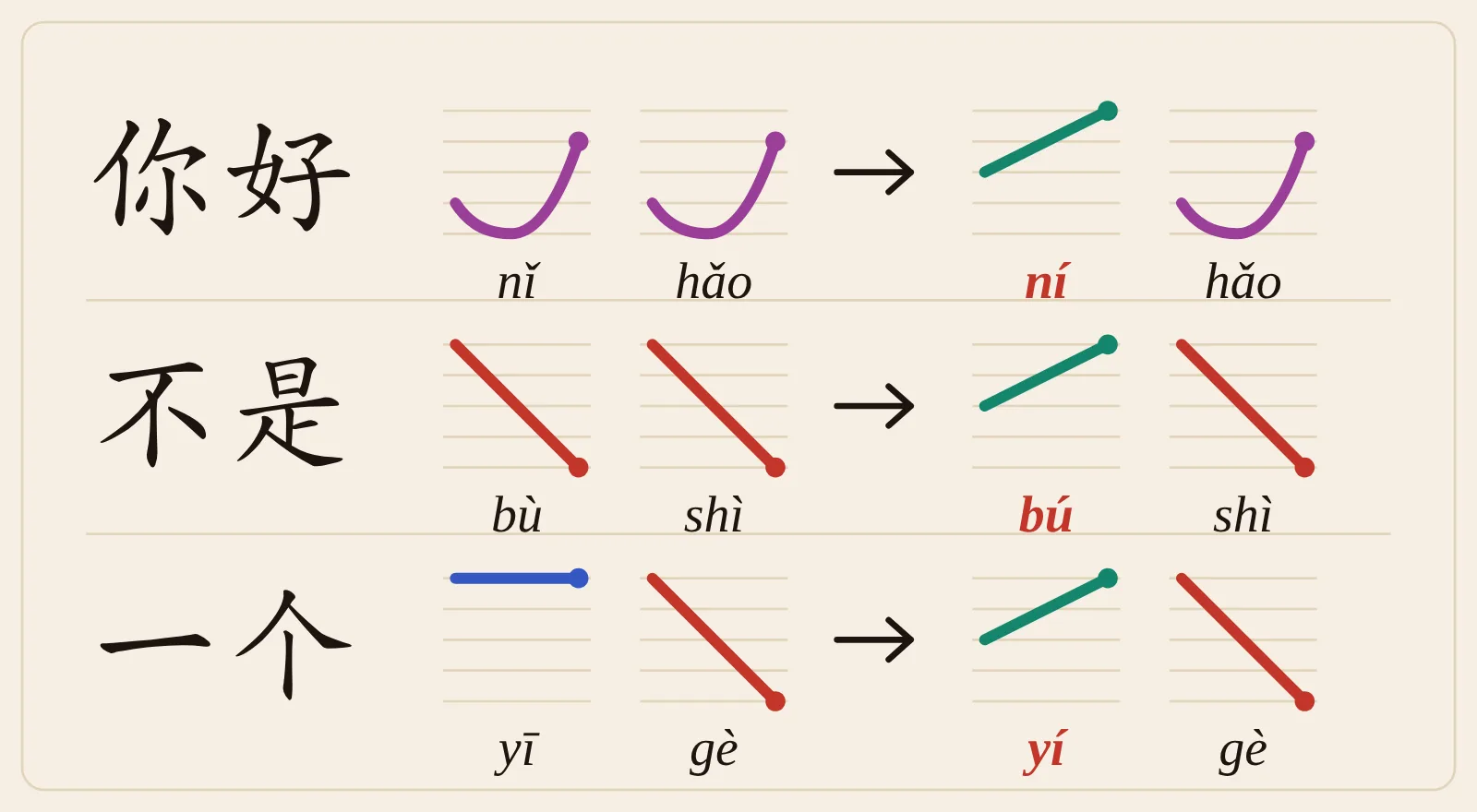
A few rules change the tone in speech, even though the written mark stays the same.
- Two third tones in a row: the first one sounds like a second tone. 你好 is written nǐ hǎo but said ní hǎo.
- 不 bù before a fourth tone becomes bú: 不是 bú shì, 不对 bú duì.
- 一 yī before a fourth tone becomes yí: 一个 yí gè, 一定 yídìng. Before a first, second or third tone it is yì: 一天 yì tiān, 一年 yì nián, 一起 yìqǐ. When counting, on its own and in ordinal numbers it stays yī: 第一 dì yī.
Five exercises to hear the tones
- Word pairs. Listen to words that differ only in tone: 买 mǎi "to buy" and 卖 mài "to sell", 汤 tāng "soup" and 糖 táng "sugar".
- Draw the tone with your hand. As you say a syllable, move your hand: level, up, down and up, down. Your body remembers the tone.
- Learn every word with its tone. Memorise the pinyin with the tone mark, not just the sounds. Relearning a word with the wrong tone takes longer than learning it fresh.
- Practise two-syllable words. Most words have two syllables, and their tones affect each other. Go through all the combinations: 中国 zhōngguó (1+2), 老师 lǎoshī (3+1), 电话 diànhuà (4+4).
- Record yourself. Say a word into a voice recorder and compare it with the model. Mistakes are much easier to hear from the outside.
Where to start
Start with single syllables, then move on to two-syllable words and short phrases. Five minutes every day does more than an hour once a week.
In Master Wang the free "Basics" course covers tones and pinyin from scratch, and the HSK lessons train the tones on every new word.